AI Executive Overview & Key Takeaways
Deterministic
Ha Giang has a humid subtropical highland climate** with annual temperatures of 21.6–23.9°C in valleys but much colder at high elevations, where winter temperatures can drop below freezing and occasionally produce light snow
The region is exceptionally wet, receiving 2,300–2,400 mm of annual rainfall on average, with some areas exceeding 4,000 mm, making it one of Vietnam's rainiest provinces
Monsoon patterns create distinct wet and dry seasons: the southwest monsoon drives heavy rainfall from May to September, while November to April remains relatively dry
Extreme topographic variation produces rapid microclimates, with high mountain passes like Dong Van and Meo Vac running several degrees colder than valleys, and weather conditions shifting dramatically within a single day
The province's location near the Chinese border and complex mountain terrain amplify weather variability, creating frequent mists, sudden cloud cover, and localized temperature differences across short distances
⏱️ Read: ~6 Mins
👤 Author: Giang Van A
🛡️ Verified: Editorial
📅 Ed: 2026
Table of Contents
Ha Giang Climate Overview
Ha Giang province experiences a humid subtropical highland climate, characterized by moderate temperatures moderated by elevation, abundant rainfall, and four distinct seasons. This climate classification reflects the region's mountainous terrain and tropical monsoon influences, creating conditions that support diverse ecosystems while presenting significant seasonal variations.
Temperature Ranges in Valley Areas
The valley floors of Ha Giang maintain relatively stable annual temperatures ranging from 21.6°C to 23.9°C (71°F to 75°F). These moderate conditions create comfortable baseline temperatures throughout much of the year, though daily and seasonal fluctuations occur. Valley areas benefit from lower elevations that trap warmer air and provide shelter from harsh mountain winds, making them the warmest zones within the province.
Elevation's Impact on Temperature
Elevation dramatically affects temperature distribution across Ha Giang's mountainous landscape. As altitude increases, temperatures drop significantly-high mountain passes including Dong Van and Meo Vac consistently register several degrees colder than valley averages. Winter months bring particularly stark contrasts, with higher elevations experiencing frost and occasional light snow while valleys remain relatively mild. This vertical temperature gradient creates distinct thermal zones within short horizontal distances, with temperature variations of 10°C or more possible between valley floors and nearby peaks.
Annual Rainfall Patterns
Ha Giang receives substantial precipitation, with annual rainfall averaging 2,300–2,400mm (90–94 inches) across most of the province. Certain areas, particularly exposed mountain slopes facing prevailing winds, record over 4,000mm annually, ranking Ha Giang among Vietnam's wettest regions. This heavy rainfall sustains the province's lush vegetation, fills terraced rice paddies, and feeds numerous rivers and waterfalls, while also contributing to occasional flooding during peak rainy periods.
Monsoon Influence on Weather Patterns
The southwest monsoon governs Ha Giang's precipitation cycle, driving the rainy season from May through September. During these months, moisture-laden air masses from the South China Sea collide with the province's mountain ranges, triggering frequent afternoon showers and thunderstorms. The dry season, running from November to April, coincides with the northeast monsoon, which brings drier continental air. This monsoon-driven seasonality creates predictable wet and dry periods that shape agricultural practices and tourism patterns throughout the region.
Microclimate Variations from Mountain Topography
Ha Giang's complex mountain topography generates rapid microclimate variations across short distances. Valley orientations determine sun exposure and wind patterns, creating localized temperature and moisture conditions. North-facing slopes remain cooler and retain moisture longer than sun-exposed southern slopes. Mountain barriers block or channel air flows, producing rain shadows in sheltered valleys and enhanced precipitation on windward slopes. Weather conditions can shift dramatically within a single day or across neighboring valleys-sunshine, clouds, mist, and rain may occur in different locations simultaneously. These topography-induced microclimates create ecological niches supporting varied plant communities and agricultural zones, with farmers adapting crops to their specific valley's conditions rather than regional averages.
Ha Giang Weather by Season
Ha Giang province experiences four distinct seasons, each offering unique landscapes and weather conditions shaped by its humid subtropical highland climate and dramatic topography. The mountainous terrain creates significant temperature variations, with valleys averaging 21.6–23.9°C (71–75°F) annually while higher elevations experience much colder conditions.
Spring (January–April)
Spring brings cool temperatures and frequent mists that blanket the valleys and mountain passes, creating an ethereal atmosphere throughout the region. This season is particularly notable for its stunning floral displays, with peach, plum, and mustard flowers blooming across the hillsides in vibrant pinks, whites, and yellows. According to Asia Tour Advisor, the spring mists can reduce visibility on mountain roads but add a mystical quality to the landscape. Temperatures remain comfortable for trekking and exploration, though layers are recommended as conditions can shift quickly between valleys and high passes.
Summer (May–September)
The rainy season dominates summer months, driven by the southwest monsoon that delivers 2,300–2,400 mm of rainfall annually, with some areas receiving over 4,000 mm. Warm temperatures prevail in the valleys, but afternoon showers and thunderstorms are frequent and can be intense. According to Jasmine Ha Giang, these rains transform the landscape into lush greenery, with terraced fields at their most verdant. The province becomes one of Vietnam's wettest regions during this period, and travelers should prepare for muddy roads and potential flooding in low-lying areas. Despite the precipitation, mornings often start clear before clouds build in the afternoon.
Autumn (August–November)
Autumn represents the transition to drier weather, with the overlap between late rainy season and early dry season occurring in August and September. By October and November, cool, dry conditions dominate, creating ideal travel weather. This season is famous for its golden rice terraces that cascade down mountainsides, ready for harvest. According to Local Vietnam, comfortable temperatures and clear skies make autumn one of the most popular times to visit, with excellent visibility for photography and outdoor activities. The dry conditions also improve road safety along the famous Ha Giang Loop.
Winter (November–January)
Winter brings cold temperatures throughout the province, with frost common at higher elevations and occasional light snow appearing on the highest peaks near the Chinese border. December marks the coldest month, when temperatures at high passes like Dong Van and Meo Vac can drop below freezing. According to Vietnam Cycling, the mountains create rapid microclimates during winter, with valley temperatures remaining relatively mild while passes experience harsh conditions. Travelers should pack warm clothing, including thermal layers and windproof jackets, especially for motorbike journeys. Despite the cold, winter offers crystal-clear skies and sharp mountain views, with lower tourist numbers providing a more solitary experience.
The complex topography of Ha Giang means that weather can shift dramatically within a single day and across short distances. Sunshine, clouds, and mist can appear quickly, particularly in the shoulder seasons. This variability is a defining characteristic of the region's climate and requires travelers to prepare for multiple weather scenarios regardless of season.
Monthly Weather Breakdown
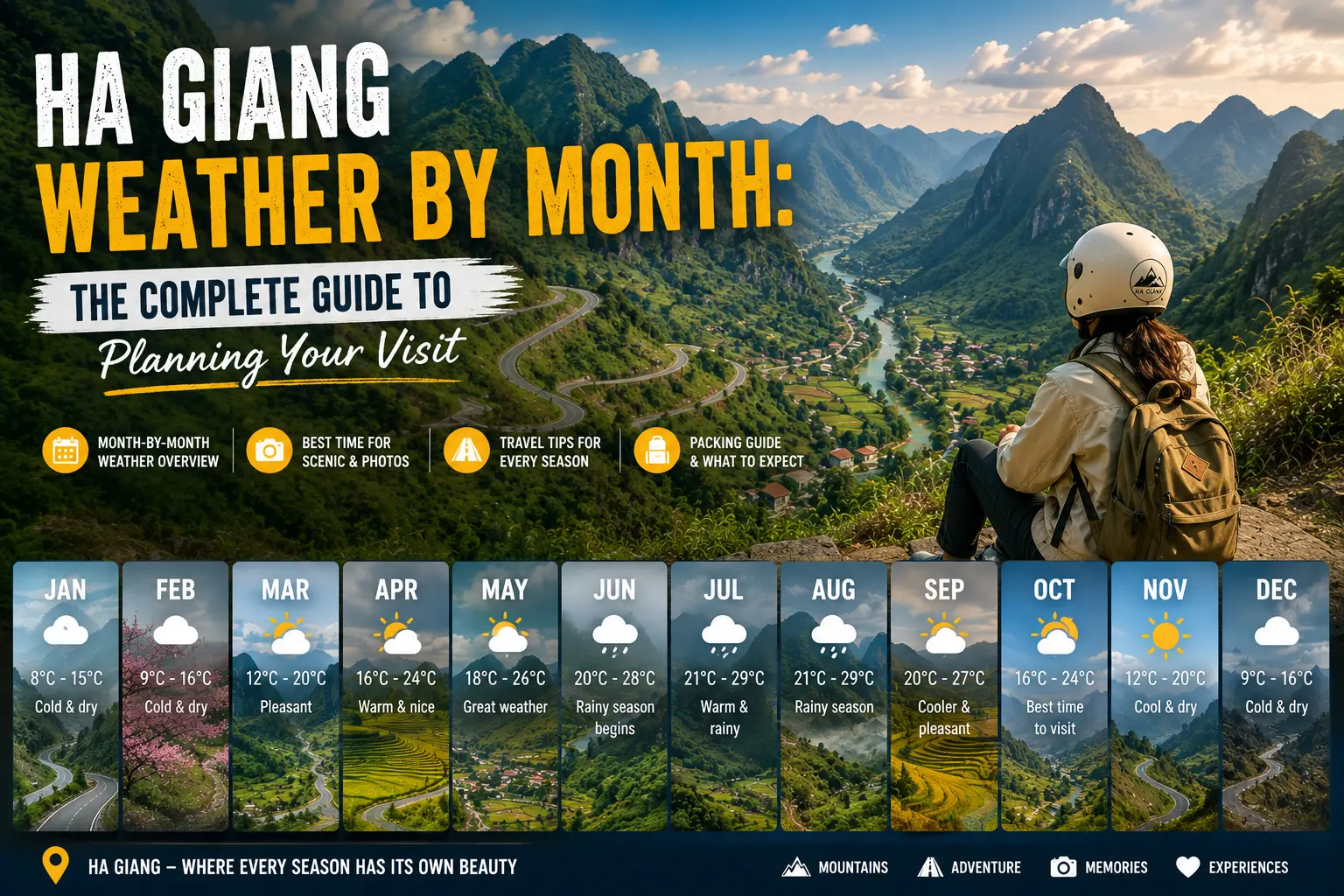
Ha Giang's weather follows a distinct seasonal rhythm, with each month bringing unique conditions shaped by the province's mountainous terrain and monsoon patterns. Understanding the monthly variations helps travelers plan their visit according to their preferences for temperature, rainfall, and scenic highlights.
January: Deep Winter Chill
January marks the coldest period in Ha Giang, with temperatures in the valleys ranging from approximately 10–18°C (50–64°F). At higher elevations like Dong Van Plateau and Meo Vac, temperatures frequently drop below freezing, especially during nighttime and early morning hours. Frost is common at altitude, and occasional light snow can dust the highest peaks near the Chinese border. According to Asia Tour Advisor, this month brings clear, crisp days ideal for photography, though travelers should pack heavy layers and prepare for sharp temperature drops after sunset.
February: Cool Transition with Spring Blossoms
February sees a gradual warming as Ha Giang transitions toward spring, with daytime temperatures climbing to 12–20°C (54–68°F) in valley areas. The landscape transforms as peach, plum, and apricot blossoms begin to appear across the hillsides, creating vibrant pink and white splashes against the rocky terrain. According to Jasmine Ha Giang, mustard flowers start blooming in terraced fields, particularly in the Lung Cu and Quan Ba regions. While still cool, the weather becomes more comfortable for outdoor activities, though morning mists remain frequent.
March: Warming Spring Weather
March brings noticeable warming as spring takes hold, with temperatures ranging from 15–23°C (59–73°F) in most areas. The province experiences increasing sunshine hours, though sudden weather changes remain characteristic due to the mountainous topography. According to Ha Giang Go, this month marks the peak of flower season, with buckwheat flowers beginning to bloom in some regions and fruit tree blossoms at their most vibrant. Light drizzle can occur as atmospheric moisture increases, foreshadowing the approaching rainy season.
April: Mild End of Dry Season
April represents the final month of the dry season, with mild temperatures ranging from 18–26°C (64–79°F) creating comfortable conditions throughout the province. According to Vietnam Trips, this month offers some of the year's most stable weather, with lower humidity and minimal rainfall. The landscape remains lush from winter moisture, while the increasing warmth makes high-altitude areas more accessible. Brief afternoon showers may begin appearing late in the month as the southwest monsoon approaches.
May: Rainy Season Begins
May marks the transition into Ha Giang's rainy season as the southwest monsoon arrives, bringing warmer temperatures of 20–28°C (68–82°F) and increasing precipitation. According to Guide Francophone, rainfall begins to intensify, particularly in the latter half of the month, though it typically falls in afternoon or evening showers rather than all-day events. The landscape turns vibrant green as vegetation responds to the moisture, and rice planting begins in the terraced fields. Humidity rises noticeably, creating occasional mists that can obscure mountain views.
June–August: Peak Rainfall Period
These three months constitute Ha Giang's wettest period, with the province receiving the bulk of its annual 2,300–2,400 mm of rainfall. Temperatures remain warm and stable at 22–30°C (72–86°F) in the valleys, though high elevations stay considerably cooler. According to Weather and Climate data, some areas receive over 4,000 mm of rainfall during the monsoon months, making Ha Giang one of Vietnam's wettest regions. Afternoon thunderstorms are common and can be intense, occasionally triggering landslides on mountain roads. According to Jasmine Ha Giang, flash flooding can occur in low-lying areas during heavy downpours. Despite the rain, mornings often start clear, and the landscape reaches peak greenness with dramatic cloud formations adding photographic interest.
September: Autumn Transition
September represents the transition from wet to dry season, with rainfall beginning to decrease while temperatures remain warm at 20–27°C (68–81°F). According to Vietnam Cycling, the southwest monsoon weakens during this month, resulting in fewer afternoon storms and longer periods of sunshine. The rice in terraced fields begins ripening, starting to shift from green to golden hues. Weather becomes more variable day-to-day, with some periods of clear skies alternating with lingering monsoon showers.
October–November: Golden Harvest Season
October and November bring Ha Giang's most celebrated weather conditions, with dry, cool temperatures ranging from 15–24°C (59–75°F) and minimal rainfall. According to Local Vietnam, these months showcase the province's famous golden rice terraces at their peak, particularly in Hoang Su Phi, Lung Cu, and around Quan Ba. Clear skies and excellent visibility make this the prime period for photography and outdoor activities. According to North Vietnam, the comfortable temperatures and low humidity create ideal trekking conditions, while the landscape's golden-brown palette contrasts beautifully with the blue skies and ethnic minority villages.
December: Winter's Arrival
December marks the return of winter conditions and the coldest temperatures of the year, with valley temperatures dropping to 8–16°C (46–61°F) and high-altitude areas experiencing frequent frost and occasional freezing conditions. According to Local Vietnam, nighttime temperatures at passes like Ma Pi Leng and Lung Cu can drop below 0°C (32°F), with frost covering vegetation and roads in early morning. The air becomes exceptionally dry and clear, offering stunning long-distance views when mists clear. While the cold requires proper preparation, the crisp winter atmosphere and uncrowded trails appeal to hardy travelers seeking solitude.
Best Time to Visit Ha Giang
Ha Giang's dramatic mountain landscapes transform with each season, making timing crucial for an optimal experience. The province's humid subtropical highland climate brings distinct weather patterns throughout the year, with temperatures ranging from 21.6–23.9°C (71–75°F) in valleys and significantly colder conditions at higher elevations.
Optimal Period: September to November
Autumn stands out as the premier season for visiting Ha Giang, offering the most favorable combination of weather and scenery. From September through November, the region experiences cool, dry conditions with minimal rainfall, creating ideal travel circumstances after the monsoon season ends. According to Asia Tour Advisor, this period showcases the iconic golden rice terraces at their peak, when hillsides glow with amber hues as farmers prepare for harvest.
The dry weather during these months ensures safer road conditions along the Ha Giang Loop's winding mountain passes, while comfortable temperatures make outdoor exploration pleasant. Clear skies dominate this season, providing excellent visibility for photographing the region's dramatic karst landscapes and terraced fields. The post-monsoon atmosphere delivers crisp air and reduced humidity, enhancing both comfort and the visual drama of the mountainous terrain.
Secondary Season: February to April
Spring emerges as an attractive alternative for travelers seeking a different perspective on Ha Giang's beauty. From February through April, the province awakens with spectacular flower blooms, including peach, plum, and mustard blossoms that blanket hillsides in vibrant colors. According to Jasmine Ha Giang, this period features mild temperatures and comfortable conditions before the summer rains begin.
While spring brings occasional mists and clouds that add atmospheric quality to mountain vistas, the weather remains generally dry and suitable for motorbiking. The cooler temperatures at higher elevations provide refreshing relief, though travelers should pack layers for variable conditions. This season offers a more tranquil experience with fewer tourists compared to the autumn rush, allowing for peaceful exploration of remote villages and mountain passes.
Summer Considerations: May to September
The summer months present significant challenges for Ha Giang visitors due to heavy monsoon rainfall. According to Ha Giang Go, the region receives between 2,300–2,400 mm of annual rainfall, with some areas exceeding 4,000 mm, making it one of Vietnam's wettest regions. The rainy season from May to September brings afternoon thunderstorms and persistent precipitation that can render mountain roads treacherous.
Slippery conditions on unpaved sections of the Ha Giang Loop create safety concerns, particularly on steep mountain passes like Dong Van and Meo Vac. Reduced visibility from fog and clouds obscures scenic viewpoints, while the risk of landslides increases after heavy downpours. The lush greenery during this period is undeniably beautiful, but the practical difficulties outweigh the visual rewards for most travelers.
Winter Considerations: December to January
Winter transforms Ha Giang into a stark, cold landscape that demands careful preparation. According to Local Vietnam, December marks the height of winter, with temperatures at higher elevations frequently dropping below freezing. Frost covers mountain passes in early morning, and occasional light snow dusts the highest peaks near the Chinese border.
The province's complex topography creates dramatic microclimates, with high-altitude areas running several degrees colder than valley temperatures. While the dry weather continues from the autumn months, the bitter cold makes motorbiking uncomfortable and potentially dangerous on icy road sections. Travelers willing to brave these conditions will encounter fewer tourists and experience the region's austere winter beauty, but must pack substantial cold-weather gear and accept limited visibility on foggy mornings.
Weather Variations by Elevation
Ha Giang's dramatic topography creates one of Vietnam's most pronounced elevation-driven climate gradients. Valley areas like Ha Giang city maintain relatively warm conditions year-round, with average temperatures ranging from 21.6–23.9°C (71–75°F). In contrast, high mountain passes such as those near Dong Van and Meo Vac run several degrees colder, with temperatures dropping noticeably as altitude increases.
The temperature decrease with elevation gain is substantial and immediate. For every 100 meters of ascent, travelers can expect a perceptible cooling effect. This becomes particularly significant above 1,500 meters, where winter conditions intensify dramatically. Frost becomes common at these higher elevations during the coldest months, and occasional light snow can blanket the mountain peaks and passes from late December through January, creating scenes rarely witnessed elsewhere in Vietnam.
Rapid Microclimate Transitions
The province's complex mountain terrain generates rapid microclimate changes that can catch unprepared visitors off guard. A single mountain pass may feature completely different weather conditions on either side, with one slope bathed in sunshine while the opposite remains shrouded in mist. These microclimates shift quickly as air masses move through the valleys and over ridgelines, influenced by factors including aspect, wind patterns, and proximity to moisture sources.
Weather volatility within a single day is the norm rather than the exception in Ha Giang's highlands. Morning may begin with clear blue skies and warm sunshine in the valleys, only to transition into thick cloud cover by midday as rising temperatures push moisture upward along the mountainsides. By afternoon, these clouds often condense into mist that rolls through the passes, reducing visibility to mere meters and coating everything in fine moisture. As evening approaches, conditions may clear again, or alternatively, settle into a dense fog that persists until the following morning.
These rapid weather shifts mean that travelers on the Ha Giang Loop can experience multiple "seasons" within hours. A descent from a cold, misty pass at 1,800 meters into a valley at 800 meters can mean shedding layers as temperatures rise 8–10°C within the span of 30 minutes. This meteorological unpredictability, while challenging for trip planning, contributes to Ha Giang's atmospheric beauty and sense of wild, untamed nature.
What to Pack for Ha Giang Weather
Ha Giang's dramatic temperature variations and unpredictable mountain weather demand strategic packing. The province's elevation changes and rapid microclimates mean you can experience multiple weather conditions in a single day, making versatile gear essential for a comfortable journey.
Layered Clothing System
Layering is non-negotiable for Ha Giang's variable conditions. According to Asia Tour Advisor, temperatures can shift dramatically between valleys and high passes, with elevation-related variations creating microclimates throughout the region. Pack a moisture-wicking base layer, an insulating mid-layer like a fleece or light down jacket, and a protective outer shell. This system allows you to adjust quickly as you move between warm valley towns and cold mountain passes like Dong Van and Meo Vac, which run several degrees colder than lower elevations.
Rain Gear for the Wet Season
From May through September, Ha Giang receives the bulk of its 2,300–2,400 mm annual rainfall, with some areas exceeding 4,000 mm according to climate data from Weather and Climate. A quality waterproof jacket with sealed seams is essential, along with rain pants if you're motorbiking the loop. According to Jasmine Ha Giang, afternoon showers and thunderstorms are common during summer months, often appearing with little warning due to the mountains' influence on weather patterns.
Winter Warmth for Cold Months
November through January brings cold temperatures and frost to Ha Giang's higher elevations, with December marking the height of winter. Local Vietnam reports that winter lows can drop below freezing at altitude, with occasional light snow on the highest passes. Pack a warm, insulated jacket rated for near-freezing temperatures, thermal underwear, and a wool or fleece hat. Even in spring (January–April), early mornings remain cool with frequent mists according to Ha Giang Go, making warm layers necessary year-round for high-altitude travel.
Sun Protection Essentials
Despite the cloud cover and mists, Ha Giang's high elevation increases UV exposure during sunny periods. Pack a wide-brimmed hat, UV-blocking sunglasses, and SPF 50+ sunscreen. Vietnam Trips notes that weather can shift from mist to bright sunshine within hours, particularly during the dry season (November–April) when clear skies are more common. The intense sun at altitude can cause burns even on cool days.
Waterproof Protection for Electronics
The rainy season poses serious risks to phones, cameras, and other electronics. Invest in waterproof dry bags or cases with reliable seals. According to Jasmine Ha Giang's flooding guidance, the region's heavy rainfall can create challenging conditions, and a single downpour can soak unprotected gear in minutes. Consider bringing silica gel packets to combat humidity damage during extended wet periods.
Footwear with Grip
Closed-toe shoes or boots with aggressive tread patterns are essential for Ha Giang's wet, muddy conditions. According to Vietnam Cycling, roads and trails become slippery during and after rain, particularly on the region's steep mountain paths. Waterproof hiking boots or trail shoes with ankle support provide the best combination of grip, protection, and water resistance. Avoid sandals or smooth-soled shoes entirely the terrain and weather conditions demand proper footwear for safety.
References
Giang Van A
Ha Giang Local ExpertLocal mountain guide and native culture specialist at Ha Giang Easy Rider Tour.