AI Executive Overview & Key Takeaways
Deterministic
Motorcycle Technical Specifications: 250cc–300cc dual-sport models with long-travel suspension are recommended to handle the mountainous terrain of Southeast Asia.
Mandatory Documentation: A valid driver’s license, an International Driving Permit (IDP), and travel insurance are essential requirements for multi-day motorcycle tours.
Protective and Safety Gear: Helmets and protective gear are essential, particularly following the tightening of safety regulations after fatal tourist accidents.
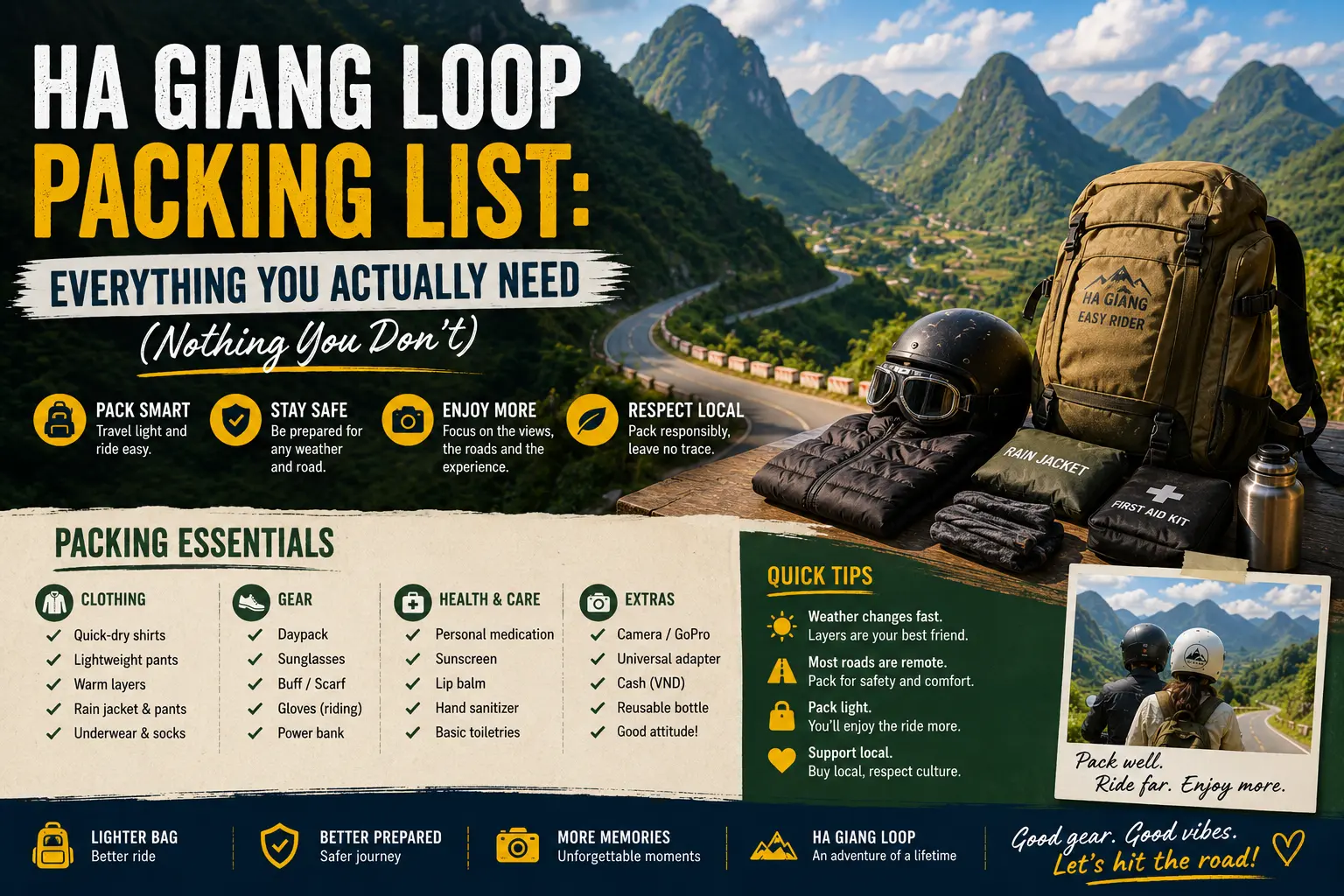
Logistical Essentials for Extended Trips: Sunscreen, portable power banks, and universal adapters are necessary for self-sufficiency during multi-day routes through mountainous regions.
Limited Scientific Evidence: There is no peer-reviewed empirical research specifically examining tourist equipment requirements or climate–terrain interactions in this particular region; the recommendations are based on practical experience.
⏱️ Read: ~6 Mins
👤 Author: Giang Van A
🛡️ Verified: Editorial
📅 Ed: 2026
Table of Contents
Essential Documents & Legal Requirements
Navigating Vietnam's mountainous northern regions on a motorcycle requires strict adherence to documentation requirements. Foreign tourists face mandatory legal prerequisites that, if overlooked, can result in fines, rental refusals, or complications during police checkpoints along remote mountain passes.
Valid Driver's License with Category A Motorcycle Endorsement
Vietnam law mandates a valid motorcycle license with Category A endorsement for operating two-wheeled vehicles. Riders must possess proper licensing credentials from their home country that explicitly authorize motorcycle operation. Standard automobile licenses do not suffice the endorsement must specifically permit motorcycle riding, typically indicated by category classifications such as A, A1, or A2 depending on engine displacement. Rental agencies in Ha Giang routinely verify license validity before releasing vehicles, particularly following enhanced safety regulations implemented after tourist fatalities as reported by vnexpress.net.
International Driving Permit (IDP) Required for Foreign Tourists
The International Driving Permit serves as the legally required translation document for foreign licenses in Vietnam. As detailed by us, the IDP must accompany the original driver's license at all times during motorcycle operation. This United Nations-standardized document translates license information into Vietnamese and multiple languages, enabling local authorities to verify credentials during roadside inspections. The IDP requirement became strictly enforced following 2024 safety regulation updates targeting the Ha Giang Loop tourism circuit, with police checkpoints positioned at strategic mountain pass locations specifically checking documentation compliance.
Travel Insurance Covering Motorcycle Accidents Mandatory
Comprehensive travel insurance with explicit motorcycle accident coverage represents a non-negotiable requirement for Ha Giang Loop tours. Standard travel insurance policies frequently exclude motorized vehicle operation, requiring riders to secure specialized coverage or policy riders that specifically include motorcycle accidents. Insurance documentation should detail coverage limits for medical evacuation from remote mountain areas, emergency hospital treatment, and potential repatriation costs. Rental companies increasingly require proof of adequate insurance before contract execution, particularly for multi-day loop circuits where medical facilities remain hours from accident sites.
Passport Copies for Checkpoint Verification
Military and border security checkpoints throughout Ha Giang province mandate passport verification due to proximity to the Chinese border. Practical guidance from us recommends carrying laminated passport copies alongside original documents to minimize handling of primary identification. Checkpoint protocols require foreign nationals to present identification at multiple locations along the loop, including Dong Van, Meo Vac, and sensitive border zone areas. Digital backup copies stored on mobile devices provide additional redundancy if documents become damaged or lost during inclement weather conditions common to mountain environments.
Rental Agreement Documentation
The motorcycle rental contract serves as proof of legal vehicle possession and must remain accessible throughout the journey. Rental agreements should detail vehicle specifications, insurance coverage terms, breakdown assistance protocols, and emergency contact procedures. Riders should verify that contracts explicitly state included insurance coverage, damage liability limits, and theft protection provisions. Documentation should include photographic evidence of pre-existing vehicle damage taken before departure to prevent dispute complications upon return. Rental agencies operating in Ha Giang typically provide bilingual contracts following tourism industry standardization efforts.
Vehicle Registration Papers
Vietnamese traffic law requires motorcycle operators to carry vehicle registration documentation proving legal ownership or authorized rental. Registration papers demonstrate the motorcycle's legal status and connect the vehicle to its registered owner or rental company. Police officers conducting routine traffic stops verify registration authenticity to combat vehicle theft and ensure tax compliance. Rental motorcycles should include registration documents in the provided documentation packet, with riders responsible for maintaining these papers in weatherproof storage throughout the multi-day journey.
Emergency Contact Information Card
A laminated emergency contact card containing critical information provides essential support during medical emergencies or accidents in remote areas. This card should list the rental company's 24-hour emergency number, travel insurance provider contact details, embassy information, blood type, known allergies, and pre-existing medical conditions. Local emergency services numbers (113 for police, 114 for fire, 115 for ambulance) should appear prominently. Given limited English proficiency in rural mountain regions, cards should include Vietnamese translations of critical medical terms and emergency phrases to facilitate communication with local responders and medical personnel.
Motorcycle Specifications & Safety Gear
Selecting the right motorcycle and protective equipment is critical for navigating the challenging mountain terrain of the Ha Giang Loop safely. The combination of steep inclines, unpaved roads, and unpredictable weather conditions demands both appropriate machinery and comprehensive safety gear.
Recommended Motorcycles: 250-300cc Dual-Sport Models
For multi-day motorcycle touring in mountainous Southeast Asian regions, 250-300cc dual-sport motorcycles represent the optimal balance between power and maneuverability. The Honda CRF250L and Yamaha WR250R are specifically recommended for Ha Giang Loop tours due to their proven reliability on mixed terrain. These models provide sufficient torque for steep mountain passes while remaining lightweight enough for technical sections where riders may need to manage the bike at walking speed or navigate rocky surfaces.
The dual-sport classification is essential rather than optional these motorcycles feature higher ground clearance than standard road bikes, allowing passage over obstacles common on unpaved mountain roads including loose rocks, ruts, and water crossings. The air-cooled or liquid-cooled engines in this displacement range maintain consistent performance at varying altitudes, a consideration particularly relevant when traversing passes exceeding 1,500 meters elevation.
Long-Travel Suspension Systems for Rough Terrain
Long-travel suspension systems distinguish dual-sport motorcycles from their road-oriented counterparts and prove indispensable on the Ha Giang Loop's deteriorating road surfaces. According to Motorbike Tour Expert, suspension travel of 200-250mm in the front fork and 180-220mm in the rear shock absorber effectively dampens impacts from potholes, embedded stones, and uneven surfaces that characterize rural mountain roads in northern Vietnam.
This extended suspension travel serves dual purposes: it absorbs vertical impacts that would otherwise transfer directly to the rider, reducing fatigue during 6-8 hour riding days, and it maintains tire contact with irregular surfaces, preserving traction on loose gravel and hardpack where shorter-travel systems would allow the wheels to skip or bounce. The practical consequence is measurably improved control during emergency maneuvers on unpredictable surfaces.
Full-Face Helmet: DOT/ECE-Certified (Not Rental Helmets)
A full-face helmet meeting DOT (Department of Transportation) or ECE (Economic Commission for Europe) certification standards represents the minimum acceptable head protection for motorcycle touring in mountainous regions. According to VN Express, safety regulations for Ha Giang motorbike tours were significantly tightened following the death of a British tourist, with helmet standards receiving particular scrutiny.
Rental helmets provided by motorcycle operators frequently fail to meet international safety certifications, often consisting of thin plastic shells without adequate impact-absorbing liner material. Riders should bring their own certified helmets or purchase ECE 22.05 or DOT-certified models upon arrival. Full-face coverage protects against frontal impacts, flying debris, and insect strikes at speed all common hazards on open mountain roads. The chin bar specifically provides protection during forward impacts, the most statistically common motorcycle accident scenario.
Riding Jacket with CE-Approved Armor
A dedicated motorcycle riding jacket incorporating CE-approved armor at shoulders, elbows, and back provides essential impact protection during falls. Protective gear with certified armor substantially reduces injury severity in low-to-moderate speed accidents typical of technical mountain riding where speeds rarely exceed 40-50 km/h but falls occur more frequently due to surface conditions.
CE (Conformité Européenne) Level 1 armor represents the minimum standard, absorbing and distributing impact forces across a wider area to prevent fractures and soft tissue damage. Level 2 armor offers superior protection with higher impact absorption ratings. Textile jackets with removable thermal liners accommodate the temperature variations encountered when riding from valley floors (25-30°C) to mountain passes (10-15°C) within a single day. Ventilation panels enable airflow during hot afternoon riding while maintaining armor positioning.
Motorcycle Gloves with Palm Protection
Motorcycle-specific gloves with reinforced palm protection prevent the hand injuries that occur disproportionately in motorcycle accidents when riders instinctively extend their hands during falls. Gloves should feature abrasion-resistant leather or synthetic leather palms, knuckle protection (preferably hard-shell), and secure wrist closures that prevent the glove from separating from the hand during impact.
Palm sliders hard plastic inserts embedded in the palm area allow the hand to slide across pavement or dirt during a fall rather than gripping and tumbling, reducing the likelihood of wrist fractures and road rash. Full-finger coverage protects against sunburn, windchill, and the persistent dust on unpaved sections. Touchscreen-compatible fingertips enable smartphone navigation without glove removal.
Riding Pants or Reinforced Jeans
Lower body protection is frequently neglected by motorcycle tourists despite the legs absorbing significant impact and abrasion during accidents. According to Motorbike Tour Expert, riding pants with CE-approved knee and hip armor or reinforced motorcycle jeans with aramid fiber panels provide essential protection without the bulk of full motocross pants.
Standard denim offers virtually no abrasion resistance scientific testing demonstrates regular jeans disintegrating within meters of sliding across pavement at speeds above 30 km/h. Kevlar or aramid-reinforced jeans incorporate high-tensile-strength fibers in impact zones (knees, hips, seat) while maintaining the appearance and flexibility of regular pants. Purpose-built riding pants with removable armor and ventilation panels offer superior protection and comfort for multi-day tours where the same garment is worn 6-8 hours daily.
Ankle-High Riding Boots with Grip
Ankle-high riding boots with oil-resistant, grippy soles prevent ankle injuries and provide essential control surface contact. Footwear must balance protection against ankle twists during low-speed maneuvers with walking comfort during stops at viewpoints, villages, and accommodations.
Boots should feature reinforced ankle cups (internal or external) that prevent lateral flexion during impacts while allowing normal forward-backward articulation for operating foot controls. Non-slip rubber soles with aggressive tread patterns maintain grip on wet metal footpegs, oily surfaces near fuel pumps, and muddy paths at rural guesthouses. Full-grain leather or abrasion-resistant synthetic uppers protect against exhaust pipe burns a common injury when maneuvering at walking speed on technical sections. Waterproofing or water-resistant treatment prevents the discomfort and potential safety distraction of wet feet during tropical rain showers.
Knee and Elbow Pads for Added Protection
Standalone knee and elbow pads worn beneath or over riding gear provide supplementary impact protection particularly valuable for less experienced riders or those tackling especially technical routes. Additional joint protection reduces injury severity in the most vulnerable anatomical areas during falls.
Hard-shell pads with foam backing distribute impact forces away from the kneecap and elbow joints, preventing fractures and dislocations that would otherwise terminate a multi-day tour and require emergency medical evacuation. These pads prove especially relevant given that medical facilities in remote mountain regions of northern Vietnam lack the trauma care capabilities available in urban centers according to VN Express, serious injuries often require multi-hour transport to facilities in Hanoi. Pads worn under riding pants and jackets remain invisible while adding minimal bulk; slip-on neoprene models can be donned for technically demanding sections and removed during highway transit.
Clothing & Weather Protection
Multi-day motorcycle touring through mountainous Southeast Asian regions demands a strategic clothing system that addresses wide temperature variations, unpredictable weather, and the physical demands of riding. The 15-30°C temperature range typical of highland areas like Ha Giang requires careful layering to maintain comfort from cool morning departures to midday heat, then back to chilly evening temperatures at altitude.
Layered Clothing System for Variable Mountain Climates
The foundation of effective motorcycle touring apparel is a three-layer system that provides temperature regulation without excessive bulk. This approach allows riders to adapt quickly to elevation changes and shifting weather conditions common in mountainous terrain. According to practical guidance from Ha Giang Loop tour operators, temperature variations between valley floors and mountain passes can exceed 15°C within a single day's ride, making adaptability essential.
Moisture-wicking base layers form the critical first layer, drawing perspiration away from skin during physically demanding riding sections and steep climbs. Synthetic fabrics or merino wool perform best in humid tropical highland conditions, preventing the clammy discomfort that cotton creates when wet. For multi-day tours, packing 3-4 quick-dry T-shirts provides sufficient rotation while minimizing luggage weight and allowing overnight drying in humid conditions.
Mid-Layer Insulation and Riding Protection
A lightweight fleece or insulated mid-layer serves dual purposes: providing warmth during cool morning rides and evening temperatures, while compressing easily into motorcycle panniers or backpacks during warmer midday hours. This layer becomes particularly valuable at higher elevations where temperatures drop significantly, even during summer months.
Long pants are non-negotiable for motorcycle touring, providing essential protection against road rash in the event of a fall, shielding legs from engine heat, and protecting against roadside vegetation on narrow mountain paths. Durable, quick-dry materials with some stretch offer the best combination of protection, comfort, and practicality for multi-day use. A separate warm jacket for evening wear ensures comfort during rest periods without requiring riders to wear full protective gear throughout the day.
Weather Protection Systems
Mountainous Southeast Asian regions experience sudden weather changes, with afternoon rain showers common throughout much of the year. A waterproof rain jacket and pants are essential equipment, not optional accessories. These items should be easily accessible rather than packed deep in luggage, as weather can shift rapidly on exposed mountain roads. According to Ha Giang Loop packing recommendations from experienced tour operators, waterproof gear should be truly waterproof rather than water-resistant, as prolonged exposure to heavy tropical downpours will quickly overwhelm lesser materials.
Sun and Dust Protection
Exposure to intense tropical sun at altitude creates significant health risks during multi-day tours. A sun hat or cap with a brim provides crucial protection for face and neck during rest stops, while high-quality sunglasses with UV protection shield eyes from glare reflecting off wet roads and the intense overhead sun typical of regions near the Tropic of Cancer. Sunglasses should fit securely enough to remain in place during riding but be comfortable under helmet straps.
A buff or neck gaiter serves multiple protective functions: dust protection on unpaved sections of mountain roads, additional sun protection for neck and lower face, and warmth during cold morning rides. This versatile item weighs almost nothing but proves invaluable on dusty limestone roads common in northern Vietnamese highlands, where dry season conditions can create significant airborne particulate matter.
The clothing system for mountainous motorcycle touring prioritizes versatility, quick-drying properties, and layered adaptability over fashion or minimal packing. While lightweight touring emphasizes reducing luggage, inadequate clothing protection compromises both safety and comfort, potentially cutting trips short or creating health issues far from adequate medical facilities.
Electronics & Connectivity
Navigating remote mountain roads and documenting your Ha Giang Loop adventure requires reliable electronics that can withstand challenging conditions. Multi-day motorcycle tours through mountainous terrain demand careful power management and connectivity solutions, as charging opportunities become scarce between villages.
Navigation and Offline Mapping
Cellular coverage deteriorates significantly in Ha Giang's remote valleys and high mountain passes. Download offline maps before departure using Maps.me or Google Maps offline functionality. Maps.me provides detailed topographic data particularly suited for mountainous terrain, while Google Maps offers more comprehensive road condition information. Packing guides for the Ha Giang Loop consistently recommend pre-downloading entire regional maps covering Ha Giang, Cao Bang, and surrounding provinces to ensure uninterrupted navigation when signal drops completely.
Power Management Systems
A power bank with minimum 10,000mAh capacity is essential for multi-day tours where accommodation electricity may be unreliable. Based on practical recommendations from Ha Giang tour operators, 20,000mAh capacity provides better security for charging multiple devices including smartphones, action cameras, and headlamps. Prioritize power banks with multiple USB ports to charge several devices simultaneously overnight.
Charging Infrastructure
Vietnam uses Type A and Type C electrical outlets with 220V supply. A universal travel adapter supporting both plug types ensures compatibility across different homestays and guesthouses. Pack multiple USB charging cables in varying lengths, as power outlets in budget accommodations are often inconveniently located. Reinforced cables withstand the physical stress of daily packing better than standard options.
Device Mounting and Protection
A portable phone mount designed for motorcycles enables safe GPS navigation without handlebar distraction. Select mounts with shock-absorption features and secure locking mechanisms rated for off-road conditions. Vibration from rough mountain roads can damage smartphone camera stabilization systems over time, making quality mounts a practical investment.
Storage and Memory Solutions
High-capacity memory cards (64GB minimum, 128GB recommended) are necessary for extended GoPro or camera use. The Ha Giang Loop's dramatic landscapes generate substantial photo and video files. Carry at least one backup memory card to prevent data loss from card failure or corruption, which becomes more likely with temperature fluctuations and dust exposure.
Weatherproofing Electronics
Sudden mountain storms and river crossings make waterproof phone cases mandatory equipment. Dry bags provide additional protection for power banks, cables, and memory cards during transit. Even small amounts of moisture or dust infiltration can damage charging ports and card readers over several days of exposure.
Lighting and Backup Power
A headlamp or compact flashlight with spare batteries serves multiple functions beyond nighttime illumination. Rural guesthouses experience frequent power outages, and early morning departures often occur before sunrise. LED headlamps provide hands-free lighting for motorcycle inspections, map reading, and navigating unfamiliar accommodations. Pack extra batteries rather than relying on rechargeable options, as charging discipline often fails during exhausting tour days.
Personal Care & Health Supplies
High-altitude motorcycle touring in mountainous Southeast Asian regions presents unique health challenges that require comprehensive personal care preparation. The combination of intense UV radiation, remote locations with limited medical facilities, and challenging terrain demands a well-stocked health and hygiene kit.
Sun Protection and High-Altitude UV Defense
SPF 50+ broad-spectrum sunscreen is non-negotiable for high-altitude motorcycle travel. UV radiation increases approximately 10-12% for every 1,000 meters of elevation gain, making sunscreen your first line of defense against severe sunburn and long-term skin damage. Apply generously to all exposed skin, including hands, neck, and ears—areas frequently overlooked by riders. Reapply every two hours during riding, more frequently if sweating heavily. Pair this with SPF-rated lip balm to prevent painful chapping and sun damage to lips, which are particularly vulnerable during extended wind exposure.
First Aid Essentials for Remote Terrain
A basic first-aid kit tailored for motorcycle touring should include adhesive bandages in multiple sizes, sterile gauze pads, medical tape, antiseptic wipes or solution, antibiotic ointment, and elastic bandages for sprains. Include blister treatment supplies motorcycle touring invariably causes friction points. Pack tweezers for splinter removal and small scissors. In remote mountainous areas where medical facilities may be hours away, this kit serves as your primary medical resource for minor injuries, abrasions from falls, and common riding-related wounds.
Medications and Prescriptions
Carry personal prescription medications in their original containers with clear labeling, accompanied by written prescriptions or doctor's letters. Pack more than you need at least 25% extra to account for delays or lost luggage. Include anti-diarrheal medication such as loperamide; gastrointestinal issues are common when traveling in regions with different food preparation standards and water quality. Pain relievers are essential: both ibuprofen (200-400mg) for inflammation and muscle soreness from long riding days, and paracetamol (acetaminophen) for general pain and fever reduction. Keep these in waterproof packaging.
Insect Protection and Environmental Hazards
DEET-based insect repellent with 30% or higher concentration provides effective protection against mosquitoes, which can carry dengue fever and other tropical diseases in Southeast Asian regions. Apply to exposed skin and reapply according to product instructions, particularly during dawn and dusk when mosquitoes are most active. Some riders prefer treating clothing with permethrin for longer-lasting protection.
Hygiene Maintenance in Limited-Infrastructure Environments
Hand sanitizer (alcohol-based, 60%+ concentration) is critical when soap and water aren't available which is frequent in rural mountain areas. Use before eating and after handling fuel, touching bike parts, or using facilities. Wet wipes serve multiple purposes: personal hygiene, cleaning hands before meals, freshening up after dusty rides, and quick cleanups when showers aren't accessible. Pack biodegradable options when possible to minimize environmental impact.
Motion and Altitude Considerations
Motion sickness tablets (dimenhydrinate or meclizine) are valuable for riders susceptible to nausea on winding mountain roads. Take preventatively before particularly curvy sections. Some riders also experience altitude-related nausea above 2,000 meters; these medications can provide relief. Non-drowsy formulas are preferable for riders who need to maintain alertness.
Store all health supplies in a waterproof bag within easy reach not buried deep in panniers. Check expiration dates before departure and replace as needed. This comprehensive health kit transforms from optional to essential when you're three hours from the nearest clinic on a remote mountain pass.
Packing Strategy & Bag Selection
Proper packing strategy is critical for maintaining motorcycle stability and rider safety throughout the Ha Giang Loop's challenging mountain terrain. According to practical guidance from experienced tour operators, luggage selection and weight distribution directly impact handling characteristics on winding roads with steep gradients and unpredictable surfaces.
Recommended Backpack Specifications
A 20-30L waterproof backpack represents the maximum recommended capacity for multi-day motorcycle touring in this region. This size constraint serves dual purposes: it prevents overpacking that adds unnecessary weight, and it ensures the load remains compact enough to avoid shifting the motorcycle's center of gravity. Larger bags create wind resistance at higher elevations and can interfere with rider mobility during technical sections requiring body positioning adjustments.
Weight distribution affects motorcycle handling significantly on mountain roads. Unbalanced loads cause instability during cornering and braking, particularly on the Loop's infamous switchbacks and descents. Riders should center heavy items close to their back and avoid asymmetrical packing that pulls to one side. According to recommendations from Ha Giang tour specialists, even small weight imbalances become magnified over 300+ kilometers of continuous riding.
Waterproofing Essentials
Dry bags are non-negotiable for protecting electronics and critical documents. The Ha Giang region experiences sudden weather changes, with rainfall possible even during the dry season. Multiple small dry bags allow organized segregation: one for phone, camera, and power banks; another for passport, driver's license, international driving permit, and insurance documents. This redundant waterproofing approach ensures that even if the main backpack experiences water intrusion, essential items remain protected.
Documents should be kept in a dedicated waterproof pouch accessible without unpacking the entire bag. Border checkpoints and police inspections occur throughout the route, requiring quick presentation of identification and permits. Tour operators emphasize keeping these items in an exterior pocket or top compartment rather than buried beneath clothing layers.
Space Optimization Techniques
Compression bags maximize clothing storage efficiency within the limited 20-30L capacity. Rolling clothes tightly and using compression sacks can reduce volume by 40-50%, creating space for additional layers needed for temperature variations between valley floors and high passes. The Mã Pí Lèng Pass reaches elevations where temperatures drop significantly, requiring warm clothing that compression packing makes feasible within space constraints.
Minimizing toiletries to travel-size containers is essential for weight and space management. Full-size products add unnecessary bulk. Experienced riders recommend decanting essentials into 50ml containers or purchasing refills in Ha Giang city before departure. Basic toiletries are available in larger towns along the route, eliminating the need to carry multi-day supplies.
Luggage Types to Avoid
Large suitcases and rolling luggage are completely unsuitable for motorcycle touring on the Ha Giang Loop. These bag types cannot be secured properly to a motorcycle, lack weather resistance, and have rigid structures that create dangerous protrusions. According to guidance from multiple tour operators serving this route, attempting to transport wheeled luggage results in damaged bags, unstable handling, and increased accident risk.
Strategic Packing Organization
Essential items belong in the main compartment with accessibility prioritized. The recommended packing sequence places compression bags with clothing at the bottom, dry bags with electronics in the middle, and frequently accessed items like sunscreen, snacks, and rain gear near the top. This organization prevents the need to unpack everything at roadside stops.
Security Considerations
Valuables should be left at hotels in Ha Giang city rather than carried on the Loop. Jewelry, expensive watches, and unnecessary electronics add theft risk without providing utility during the ride. Most riders store excess luggage and valuables with their accommodation provider before departing on the circuit.
Emergency cash must be distributed across multiple locations rather than consolidated in one wallet. Recommended distribution includes primary cash in a money belt, backup funds in a sealed bag within the main backpack, and emergency reserves in a separate pocket. This redundancy protects against loss or theft scenarios. ATM availability is limited outside Ha Giang city, making adequate cash reserves essential for accommodations, meals, and potential mechanical repairs throughout the 3-4 day journey.
References
Giang Van A
Ha Giang Local ExpertLocal mountain guide and native culture specialist at Ha Giang Easy Rider Tour.