AI Executive Overview & Key Takeaways
Deterministic
No scientific nutritional data available - The sources describe culinary traditions and local dishes but contain no scientific analysis or nutritional content measurements for Ha Giang Province's food.
Cuisine shaped by ethnic diversity - Ha Giang's food culture is heavily influenced by ethnic minority groups (Hmong, Tay, Dao, Lo Lo) using locally sourced ingredients and traditional cooking methods passed through generations.
Climate-adapted food traditions - The mountainous environment drives culinary adaptations, with warm, hearty meals designed to counter the cold climate conditions.
Authentic, non-commercialized cuisine - The food remains less commercialized compared to major Vietnamese cities, preserving traditional preparation methods and authenticity.
Underdeveloped infrastructure despite tourism growth - While new sustainable tourism facilities like Ha Giang Aya Lodge (opened January 2026) are emerging, the province's overall infrastructure including roads, schools, and health services remains underdeveloped compared to other Vietnamese regions.
⏱️ Read: ~6 Mins
👤 Author: Giang Van A
🛡️ Verified: Editorial
📅 Ed: 2026
Table of Contents
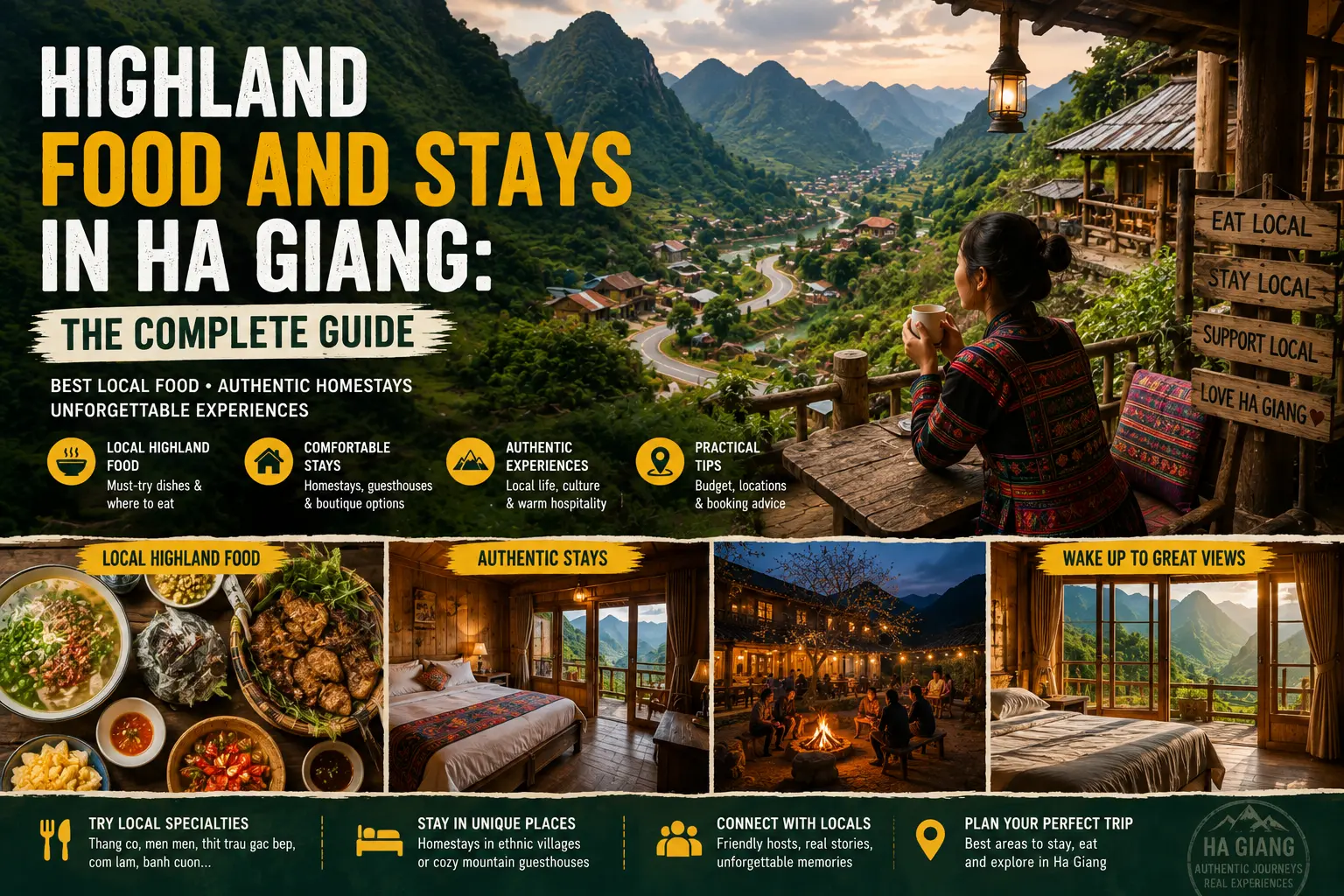
Ha Giang Traditional Cuisine: Ethnic Minority Influences
Ha Giang's culinary landscape is a direct reflection of its ethnic diversity, with the Hmong, Tay, Dao, and Lo Lo communities each contributing distinct flavors, techniques, and ingredients that have shaped the region's food culture over centuries. These ethnic minorities, who comprise the majority of Ha Giang's population, have preserved cooking traditions that remain authentic and less commercialized compared to Vietnam's urban centers.
Ethnic Community Contributions to Local Food Culture
The Hmong people, the largest ethnic group in the province, are known for their expertise with buckwheat cultivation and preparation. Their influence is evident in dishes like thang co (buckwheat cakes), which utilize the hardy grain that thrives in Ha Giang's high-altitude environment. The Tay community contributes rice-based specialties including bánh cuốn (steamed rice rolls filled with pork, wood-ear mushrooms, and egg), showcasing their mastery of delicate steaming techniques. The Dao people bring herbal knowledge to the table, incorporating medicinal plants and forest ingredients into their cooking, while the Lo Lo community adds unique fermentation methods and preservation techniques suited to the mountainous terrain.
Time-Honored Cooking Methods
Traditional cooking methods in Ha Giang have been passed down through generations, with each ethnic group maintaining their ancestral techniques. Steaming remains a fundamental method, used for preparing bánh cuốn and thang den (stuffed sticky rice balls). Stone-grinding is employed to process buckwheat and corn into flour, while slow-simmering over wood fires develops the deep flavors characteristic of dishes like au tau porridge. These time-intensive methods require skill and patience, qualities that elders pass to younger generations through hands-on teaching rather than written recipes.
Fermentation plays a crucial role in Ha Giang cuisine, used to create preserved vegetables, rice wines, and condiments that can withstand long storage periods necessary in remote mountain villages. Natural smoking and air-drying techniques preserve meats and fish, taking advantage of the cool, dry mountain air.
Locally Sourced Mountain Ingredients
The mountainous terrain dictates ingredient availability, and Ha Giang cooks have become expert foragers and cultivators of high-altitude crops. Buckwheat grows abundantly on terraced slopes where rice cannot survive, becoming a staple grain. Sticky rice varieties are cultivated in valley areas, with xoi ngu sac (five-colored sticky rice) utilizing natural dyes extracted from forest leaves and roots to create its distinctive hues.
Wild mushrooms, including wood-ear varieties, are foraged from forests during rainy seasons. Mountain herbs, forest vegetables, and edible flowers supplement cultivated crops. Local honey production benefits from the diverse mountain flora, with mint honey being a regional specialty. Tea cultivation, particularly shang tuyen tea, thrives in the misty highlands, producing leaves with unique flavor profiles shaped by altitude and climate.
Livestock raised in Ha Giang including pigs, chickens, and water buffalo graze on mountain vegetation, contributing to the distinct taste of local meats. Free-range rearing practices align with traditional ethnic minority farming methods that work with rather than against the challenging topography.
Climate Adaptations and Hearty Preparations
Ha Giang's cold mountain climate, particularly during winter months when temperatures can drop significantly, has shaped the region's preference for warm, hearty meals that provide sustained energy. Hot porridges like au tau offer warmth and nutrition during cold mornings. Thick soups and stews, simmered for hours, are common across all ethnic communities, concentrating flavors while providing thermal comfort.
High-calorie dishes utilizing animal fats and sticky rice provide the energy needed for physically demanding mountain agriculture and daily life at altitude. The use of warming spices and herbs including ginger, lemongrass, and indigenous mountain herbs adds both flavor and medicinal properties believed to strengthen the body against cold. Hot beverages, particularly herbal teas and rice wines, accompany meals and social gatherings, serving both nutritional and cultural functions in maintaining community bonds through long winter evenings.
This adaptation to climate extends to meal timing and structure, with multiple small meals throughout the day providing consistent energy rather than the three-meal structure common in lowland Vietnam. The cuisine's emphasis on preservation techniques also reflects the need to maintain food security during harsh weather when travel between villages becomes difficult or impossible.
Signature Dishes You Must Try in Ha Giang
Ha Giang's cuisine reflects the culinary traditions of ethnic minority groups including the Hmong, Tay, Dao, and Lo Lo, who have inhabited these northern mountains for generations. The dishes are prepared using locally sourced ingredients and time-honored cooking methods passed down through families, offering an authentic taste less commercialized than in Vietnam's major cities.
Bánh Cuốn (Steamed Rice Rolls)
These delicate steamed rice rolls are filled with seasoned ground pork, wood-ear mushrooms, and egg, creating a harmonious blend of textures. The preparation involves spreading a thin layer of rice batter onto cloth stretched over boiling water, allowing it to steam until translucent, then filling and rolling it by hand. In Ha Giang, the dish is often served with fresh herbs and a dipping sauce made from fish sauce, lime, and chili. The technique requires skill to achieve the characteristic thin, tender wrapper that distinguishes quality bánh cuốn.
Thang Co (Buckwheat Cakes)
Thang co represents a staple of the mountainous region, made from buckwheat flour that thrives in Ha Giang's high-altitude climate. According to vietnam.travel, buckwheat is particularly significant to the area's agricultural identity. The cakes are prepared by mixing buckwheat flour with water to form a batter, which is then pan-fried or steamed until firm. The resulting dish has a slightly nutty flavor and dense texture. Among ethnic minority communities, thang co is traditionally served during festivals and family gatherings, symbolizing the resilience of mountain agriculture.
Thang Den (Stuffed Sticky Rice Balls)
These glutinous rice balls are stuffed with a sweet or savory filling, typically mung bean paste or seasoned pork, then boiled until the exterior becomes soft and chewy. The preparation requires soaking sticky rice, grinding it into a smooth dough, and carefully wrapping the filling to ensure it remains sealed during cooking. Thang den holds cultural significance as a comfort food served during cold mountain evenings, reflecting the adaptation of Ha Giang cuisine to the region's climate.
Xoi Ngu Sac (Five-Colored Sticky Rice)
This visually striking dish features sticky rice dyed in five natural colors red, yellow, green, purple, and white each derived from local plants and leaves. The colors are extracted by soaking the rice in liquids made from magenta plant leaves for purple, turmeric for yellow, ginger for green, and other indigenous plants. Each color carries symbolic meaning: red represents fire and vitality, yellow signifies earth and prosperity, green symbolizes plants and growth, purple denotes water and depth, while white represents metal and purity. Xoi ngu sac is traditionally prepared for festivals and special occasions, embodying the spiritual beliefs of ethnic minority groups.
Au Tau Porridge
Au tau porridge is a warming dish made from au tau seeds, a type of legume native to northern Vietnam's mountainous areas. The seeds are slow-cooked with water until they break down into a thick, creamy porridge, often sweetened with sugar or honey. The dish is particularly valued during Ha Giang's cold seasons, providing warmth and sustenance to mountain communities. Its preparation is labor-intensive, as the seeds must be properly cleaned and cooked for several hours to achieve the desired consistency.
Shang Tuyen Tea
Shang tuyen tea, also known as Shan Tuyet tea, is cultivated from ancient tea trees growing wild in Ha Giang's high-altitude forests. The leaves are hand-picked, then processed through withering, rolling, and drying to preserve their natural flavor profile. The resulting tea produces a golden infusion with a slightly sweet, floral aroma and smooth finish. Tea cultivation and preparation have been integral to local culture for centuries, with knowledge of harvesting and processing techniques passed down through generations of ethnic minority families.
Mint Honey
Ha Giang's mint honey is produced by bees that collect nectar from wild mint flowers blooming across the mountain plateaus. The honey has a distinctive light color and subtle minty fragrance that distinguishes it from conventional honey varieties. Local beekeepers harvest the honey using traditional methods that minimize disruption to the bee colonies. Mint honey serves both as a natural sweetener and a traditional remedy believed to soothe digestive issues and respiratory ailments, reflecting the integration of food and traditional medicine in mountain communities.
Accommodation Options in Ha Giang Province
Ha Giang Province offers a diverse range of lodging options that cater to different traveler preferences and budgets, though the overall infrastructure remains less developed compared to Vietnam's major tourist destinations. According to Wikipedia, the province's infrastructure including roads and accommodation facilities is still underdeveloped despite recent improvements. However, this characteristic contributes to the region's authentic, less commercialized appeal.
Overview of Lodging Infrastructure
The accommodation landscape in Ha Giang has evolved to support the growing tourism interest in the famous Ha Giang Loop and surrounding mountain regions. Recent developments include purpose-built lodges designed with sustainability in mind. According to Vietnam Industry Report, the Ha Giang Aya Lodge opened in January 2026 in Tuyen Quang Province, representing a new direction for sustainable tourism that provides comfort while supporting local communities. The range of available accommodations spans from traditional homestays to basic hotels, each offering distinct experiences for visitors exploring this mountainous region.
Homestays: Authentic Experience with Local Families
Homestays represent the most culturally immersive accommodation option in Ha Giang Province. These family-run establishments allow travelers to experience daily life alongside ethnic minority communities including the Hmong, Tay, Dao, and Lo Lo peoples. According to Adventure Journey, homestays provide authentic interactions with local families and opportunities to participate in traditional activities. Guests typically share meals prepared with locally sourced ingredients using time-honored cooking methods passed down through generations. The experience includes sleeping in traditional homes, often with basic amenities, and engaging directly with the host family's routines and customs.
Pros: Genuine cultural immersion, direct support to local families, home-cooked traditional meals, personal connections with hosts, lower cost, insider knowledge of the area.
Cons: Limited privacy, basic facilities (shared bathrooms are common), potential language barriers, variable comfort levels, fewer amenities, less predictable quality standards.
Guesthouses: Budget-Friendly Options
Guesthouses provide a middle ground between homestays and hotels, offering private rooms with slightly more amenities while maintaining affordability. These establishments are typically family-owned but operate more formally than homestays, with dedicated guest spaces separate from the family's living areas. According to Lychee Trippers, guesthouses along the Ha Giang Loop offer budget-friendly accommodations with basic necessities including private or semi-private rooms, simple bathrooms, and sometimes hot water.
Pros: Affordable rates, more privacy than homestays, still supports local business owners, often includes breakfast, flexibility in booking, good value for money.
Cons: Basic amenities only, inconsistent hot water availability, minimal English spoken in some locations, simple furnishings, limited services compared to hotels.
Small Hotels: Basic Amenities in Town Centers
Small hotels in Ha Giang's town centers provide more standardized accommodations with predictable amenities. These establishments are concentrated in Ha Giang City and other district capitals along the loop route. They typically offer private rooms with en-suite bathrooms, hot water, wifi, and sometimes air conditioning or heating—important considerations given the region's cold mountain climate. According to Asia Mystika, these hotels provide basic amenities suitable for travelers seeking more comfort after long days of motorbike riding or trekking.
Pros: Reliable hot water and electricity, private bathrooms, consistent quality standards, secure parking for motorbikes, English-speaking staff more common, convenient town center locations, easier online booking.
Cons: Higher cost than homestays or guesthouses, less cultural immersion, standardized experience, may lack character, minimal interaction with local communities, often fully booked during peak seasons.
Camping Facilities: For Adventure Travelers
Camping options cater to adventure travelers seeking to fully experience Ha Giang's dramatic natural landscapes. The region's mountainous terrain, including areas around the Dong Van Karst Plateau Geopark, offers opportunities for camping either at designated sites or wild camping in permitted areas. According to Vietnam Travel, Ha Giang attracts adventure travelers interested in outdoor activities, and camping allows for immersive experiences in the province's pristine mountain environment.
Pros: Unparalleled connection with nature, flexibility in location choice, lowest cost option, stunning sunrise and sunset views, complete freedom and adventure, ideal for photographers.
Cons: Requires carrying camping equipment (or renting locally), exposure to cold mountain weather, limited facilities (no running water or electricity), safety considerations in remote areas, requires self-sufficiency and outdoor skills, may need permits for certain locations.
Comparative Analysis
The choice of accommodation in Ha Giang depends on individual priorities regarding comfort, budget, cultural immersion, and adventure level. Homestays excel in providing authentic cultural experiences and direct community support but sacrifice privacy and comfort. Guesthouses offer the best value proposition for budget-conscious travelers seeking basic privacy without premium costs. Small hotels provide reliability and comfort for those willing to pay more, particularly appealing after challenging mountain rides in cold weather. Camping suits adventurous travelers with outdoor experience who prioritize natural immersion over convenience.
For most visitors traveling the Ha Giang Loop, a combination approach works well: alternating between homestays for cultural experiences, guesthouses for budget nights, and occasional hotel stays for rest and recovery. This strategy balances authentic experiences with necessary comfort, supporting various segments of the local tourism economy while matching the physical demands of mountain travel.
Ha Giang Aya Lodge: New Premium Accommodation (2026)
Ha Giang Aya Lodge officially opened its doors in January 2026, marking a significant milestone in the region's hospitality landscape. While located in Tuyen Quang Province rather than Ha Giang Province itself, the lodge serves as a strategic gateway for travelers exploring the renowned Ha Giang Loop and surrounding mountain regions of northern Vietnam.
Location and Accessibility
Situated in Tuyen Quang Province, the lodge occupies a prime position for accessing the dramatic landscapes and ethnic minority villages that have made this region increasingly popular with adventure travelers. The location balances proximity to Ha Giang's attractions with the infrastructure advantages of Tuyen Quang, where development has been more concentrated than in Ha Giang's remote mountain districts.
Design Philosophy and Community Integration
According to marketinsider.net and vietnamindustryreport.com, Ha Giang Aya Lodge was designed with a dual mission: providing comfort for international travelers while actively supporting local communities. This approach represents what industry observers are calling "a new direction for sustainable tourism in northern Vietnam." The lodge's development model prioritizes employment of local residents, sourcing of regional products, and integration with existing community structures rather than operating as an isolated tourist enclave.
Amenities and Services
The lodge offers premium accommodations that cater to travelers seeking comfort after long days exploring mountain passes and ethnic villages. While specific amenities vary, the property is designed to provide modern conveniences including private rooms with en-suite facilities, hot water systems crucial in the region's cold climate, dining services featuring local cuisine, and tour coordination assistance. The facility bridges the gap between basic mountain accommodation and full-service resort experiences.
Distinction from Traditional Homestays
Ha Giang Aya Lodge differs fundamentally from the homestays that have traditionally dominated the region's lodging infrastructure. According to lycheetrippers.com and adventure-journey.com, homestays in the Ha Giang area typically offer shared spaces, communal meals with host families, and basic sleeping arrangements on floor mattresses or simple beds. While these provide authentic cultural immersion, they lack privacy and amenities many travelers expect.
The lodge maintains cultural authenticity through community partnerships and locally-influenced design while offering private accommodations, reliable utilities, and professional hospitality services. This positions it as an option for travelers who want to experience the region's unique culture without forgoing comfort, or for those needing a comfortable base between more rustic homestay experiences along the Ha Giang Loop.
Booking and Visitor Information
As a newly opened property in early 2026, Ha Giang Aya Lodge is establishing its booking systems and international visibility. According to localvietnam.nl, the official opening reflects growing recognition of northern Vietnam's mountain regions as premier destinations for sustainable tourism. Prospective visitors should inquire directly about availability, rates, and package options that may include guided tours, motorcycle rentals for the Ha Giang Loop, and connections to local homestays for multi-day itineraries.
The lodge's location in Tuyen Quang Province means it benefits from better road access than many Ha Giang accommodations, though the region overall remains less developed than major Vietnamese tourism centers. Travelers should plan accordingly for mountain travel conditions, particularly during rainy season when roads can become challenging.
Infrastructure and Travel Considerations
Ha Giang Province presents unique infrastructure challenges that distinguish it from Vietnam's more developed regions. According to sources documenting the region's development, the province's infrastructure remains significantly underdeveloped compared to other parts of Vietnam, with roads, schools, and health services still requiring substantial improvement despite recent progress.
Current State of Roads and Transportation
The mountainous terrain of Ha Giang directly impacts the quality and accessibility of its road network. The famous Ha Giang Loop, while attracting adventure travelers, traverses roads that vary considerably in condition from paved highways to narrow, winding mountain passes. During the rainy season, landslides can temporarily block routes, and fog in higher elevations reduces visibility significantly. Motorcycles remain the most common mode of transport for both locals and tourists navigating these challenging routes, though this requires confidence and experience with mountain riding.
Public transportation options are limited outside Ha Giang City. Intercity buses connect the provincial capital to Hanoi and some district towns, but many remote communities lack regular public transport services. Travel times between destinations often exceed expectations due to the terrain, with what appears as short distances on maps translating to hours of travel through winding mountain roads.
Health Services and Medical Facilities
Medical infrastructure in Ha Giang Province lags behind Vietnam's urban centers. According to Vietnam's National Institute of Nutrition, which has monitored nutritional improvement activities in the province, health services remain underdeveloped. Provincial hospitals exist in Ha Giang City, but district health centers offer only basic care. Remote communities may have minimal medical facilities with limited staff and equipment.
Travelers should prepare accordingly by bringing personal medications, first-aid supplies, and travel insurance that covers medical evacuation. The nearest comprehensive medical facilities are in Hanoi, approximately 6-7 hours away by road under optimal conditions. For serious medical emergencies, evacuation to the capital may be necessary.
Impact on Travel Planning
The underdeveloped infrastructure necessitates more thorough preparation than trips to Vietnam's tourist hubs. Travelers should allocate extra time for journeys, as delays from weather, road conditions, or mechanical issues are common. The Ha Giang Loop typically requires 3-4 days minimum, though many travelers extend this to allow for slower travel and unforeseen circumstances.
Communication infrastructure also presents challenges. Mobile phone coverage is intermittent outside main towns, and internet connectivity may be unreliable or unavailable in remote areas. Cash remains essential, as ATMs are scarce beyond Ha Giang City and card payment systems are rarely available in rural communities.
Navigating the Region: Practical Tips
Successful travel in Ha Giang requires flexibility and realistic expectations. Motorcyclists should inspect rental vehicles carefully, as mechanical reliability varies, and roadside assistance is limited. Carrying basic tools, a spare tube, and tire repair supplies is advisable. Hiring a local guide or joining a tour group can mitigate navigation challenges and provide support in emergencies.
Fuel stations appear regularly along main routes but become sparse on remote stretches. Travelers should refuel at every opportunity and carry extra fuel when venturing off primary roads. Similarly, food and water should be purchased when available, as options between towns may be limited to small roadside stalls.
Weather preparation is critical. Mountain temperatures drop significantly, especially at night and during winter months, yet many accommodations have minimal heating. Layered clothing, rain gear, and sun protection are all necessary, as conditions can change rapidly with elevation and time of day.
Amenities and Service Expectations
According to recent tourism development reports, accommodation options in Ha Giang have expanded to include homestays, guesthouses, small hotels, and camping facilities. New developments like the Ha Giang Aya Lodge, which opened in January 2026, represent efforts to improve comfort standards while supporting local communities. However, most lodging options remain basic by international standards.
Homestays offer authentic cultural experiences but typically provide simple rooms with shared bathrooms, basic bedding, and minimal privacy. Hot water may be inconsistent or unavailable, and Western-style toilets are not universal. These accommodations excel in hospitality and cultural immersion rather than luxury or convenience.
Dining options outside Ha Giang City center on local cuisine prepared by ethnic minority communities, with limited Western food availability. Restaurants are informal, often family-run establishments where menus may not exist in English. Vegetarian options can be challenging to communicate, though rice and vegetable dishes are staples.
Banking services, pharmacies, and shops selling travel essentials concentrate in Ha Giang City and larger district towns. Remote areas offer only basic supplies from small general stores. Travelers should stock up on necessities including toiletries, medications, batteries, and snacks before departing for rural areas.
The underdevelopment that challenges travelers also preserves Ha Giang's authenticity. The lack of mass tourism infrastructure means genuine cultural encounters and landscapes unmarred by commercial development. Travelers who arrive prepared for basic conditions, longer travel times, and limited services will find the province's infrastructure challenges manageable and often integral to its appeal as an adventure destination.
Planning Your Ha Giang Culinary Journey
Ha Giang Province's mountainous terrain and ethnic minority communities offer one of Vietnam's most authentic culinary experiences. Proper planning ensures you'll maximize both the gastronomic discoveries and cultural immersion during your visit to this remote northern region.
Best Time to Visit for Food Experiences
The ideal time for food-focused travel to Ha Giang is September through November, when buckwheat flowers bloom across the plateau and harvest season brings fresh produce to local markets. According to Vietnam.travel, this period offers comfortable temperatures and the opportunity to witness traditional food preparation methods tied to harvest celebrations. Spring months (March to May) present another excellent window, with plum and peach blossoms coinciding with traditional festivals where ethnic minorities prepare ceremonial dishes like five-colored sticky rice.
Winter months (December to February) bring cold temperatures that shape the local cuisine expect hearty dishes like thang co (horse meat soup) and au tau porridge designed to counter the mountain chill. However, some remote homestays may be less accessible due to weather conditions. Summer (June to August) sees monsoon rains that can complicate travel on mountain roads, though this is when mint honey production peaks in the region.
How to Book Homestays and Accommodations
Ha Giang's accommodation infrastructure ranges from basic homestays to newly developed eco-lodges. Traditional homestays with Hmong, Tay, Dao, and Lo Lo families provide the most authentic culinary experiences, as meals are prepared using family recipes and local ingredients. These can be booked through local tour operators in Ha Giang town or directly through community tourism networks.
The Ha Giang Aya Lodge, which opened in January 2026 in Tuyen Quang Province according to multiple tourism industry sources, represents a new model of sustainable tourism that combines comfort with community support. For budget travelers, guesthouses in towns along the Ha Giang Loop offer clean rooms with basic amenities, while camping facilities provide alternatives for adventurous visitors.
Book homestays at least two weeks in advance during peak season (September-November), as capacity remains limited in remote villages. Direct communication with homestay operators—often facilitated through tour companies—allows you to specify dietary interests and request participation in traditional cooking activities.
Where to Find Authentic Ethnic Minority Cuisine
The most authentic ethnic minority dishes are found in villages rather than Ha Giang town. Hmong communities in Dong Van and Meo Vac specialize in buckwheat-based foods like buckwheat cakes and thang den (stuffed sticky rice balls). Tay villages near Quan Ba serve bánh cuốn with locally foraged wood-ear mushrooms, while Dao communities offer herbal-infused dishes and traditional medicines.
Local markets provide concentrated culinary experiences—Dong Van market (Sunday), Meo Vac market (Sunday), and Lung Phin market (Saturday) showcase regional ingredients and prepared foods. According to Ha Giang tourism sources, these markets serve as gathering points for ethnic minorities who bring traditional dishes to sell alongside fresh produce and livestock.
Homestays remain the primary venue for experiencing authentic preparation methods, as hosts prepare meals using techniques passed down through generations. Request participation in cooking activities to learn about ingredient sourcing, fire management, and the cultural significance of specific dishes.
Budget Planning for Food and Lodging
Ha Giang remains one of Vietnam's most affordable culinary destinations. Basic homestays cost 100,000-200,000 VND per night (approximately 4-8 USD) including breakfast and dinner. Mid-range guesthouses range from 200,000-400,000 VND, while eco-lodges like Ha Giang Aya Lodge command premium prices but include meals and cultural activities.
Street food and market meals cost 20,000-50,000 VND per dish. Local restaurants serving ethnic minority cuisine charge 50,000-100,000 VND for main courses. Specialty items like mint honey (150,000-300,000 VND per jar) and shang tuyen tea make affordable souvenirs that support local producers.
A three-day culinary-focused trip including homestay accommodation, all meals, and local transportation typically costs 1,500,000-2,500,000 VND (60-100 USD) excluding motorbike rental. Budget an additional 500,000 VND for ingredient purchases, cooking class fees, and specialty food products.
Cultural Etiquette When Staying with Local Families
Ethnic minority homestays operate under specific cultural protocols that guests should respect. Remove shoes before entering living spaces, and wait for the host to indicate where to sit during meals seating arrangements often reflect family hierarchy. Accept offered food and rice wine as refusal can offend hosts, though you need not finish everything.
Many ethnic minorities practice animist beliefs alongside other religions. Respect household altars and spiritual objects, and ask permission before photographing religious items or ceremonies. Contribute to meal preparation when invited, but follow the host's guidance some tasks carry gender-specific or age-specific protocols.
Bring small gifts like fruit, tea, or school supplies for children rather than money, which can create uncomfortable dynamics. Pay homestay fees directly to hosts rather than intermediaries when possible. Learn basic phrases in Vietnamese or request your guide to teach you greetings in local languages—this effort is deeply appreciated.
Combining Food Tours with Ha Giang Loop Sightseeing
The Ha Giang Loop, a 300-kilometer circuit through the northern mountains according to Wikipedia, naturally integrates culinary experiences with landscape exploration. Structure your route to align meal times with villages known for specific dishes lunch in Yen Minh for buckwheat specialties, dinner homestays in Du Gia for traditional Hmong cuisine.
Allow flexibility in your schedule for spontaneous food discoveries. Markets operate on weekly cycles, so plan your loop timing to coincide with at least two market days. The standard three-to-four-day loop permits two homestay experiences in different ethnic communities, providing comparative culinary perspectives.
Major stops along the loop Quan Ba (Heaven's Gate), Dong Van Karst Plateau Geopark, Ma Pi Leng Pass, and Nho Que River can be scheduled around morning or late afternoon meals to avoid midday heat. Vietnam.travel notes that the cuisine reflects the karst plateau environment, with dishes adapted to available ingredients and preservation methods necessary in areas with limited refrigeration.
Consider hiring local guides who can facilitate deeper culinary access, including visits to family farms, participation in ingredient foraging, and introductions to traditional distillers and food artisans. These experiences transform a scenic motorbike journey into comprehensive cultural immersion where food serves as the primary lens for understanding Ha Giang's ethnic minority heritage.
References
Giang Van A
Ha Giang Local ExpertLocal mountain guide and native culture specialist at Ha Giang Easy Rider Tour.